 KESSELGRID
Press kit
Fact sheet
| Title | Kesselgrid |
|---|---|
| Genre | Turn-based grand strategy, hex wargame |
| Setting | The First World War (from 1910) and the Second World War (from 1936) |
| Developer | Un Tercio Studios, the one-person studio of Víctor Nolasco Sánchez, Spain (LinkedIn) |
| Publisher | Self-published |
| History | In development since September 2025. First prototype as Hexfront (web), rebuilt in Unity in 2026. |
| Platforms | Windows PC (Steam). Android to follow (Google Play). |
| Release | First quarter of 2027 on Steam (store page). |
| System requirements | Minimum: Intel Core i5-6600 or AMD Ryzen 5 1600, 8 GB of RAM, GeForce GTX 960 or Radeon RX 470 with 2 GB, 10 GB of disk. Recommended: Intel Core i5-12400 or AMD Ryzen 5 5600, 16 GB of RAM, GeForce GTX 1060 6 GB or Radeon RX 580 8 GB. |
| Modes | Single player campaign and sandboxes, online multiplayer and co-op, spectator, tutorial |
| Scenarios | British campaign (Dunkirk 1940, North Africa, Sicily 1943), Europe 1936 (43 nations), World 1936 (85 nations), Europe 1910 (35 nations), The Balkan Wars (1912), Tutorial: Poland 1939 |
| Languages | English, Spanish, German, French, Italian, Polish, Brazilian Portuguese, Russian, Turkish, Japanese, Korean and Simplified Chinese |
| Engine | Unity, with a dedicated authoritative server for online play |
| Links | kesselgrid.com, Discord, X (@KesselgridDev) |
Short description
Turn-based grand strategy on a hex map, in the First and Second World Wars. Run a nation's economy and diplomacy, command its armies, fleets and air force, break the front and close the ring around the enemy. Fight the British campaign from Dunkirk to Sicily, lead one of 85 nations in a world on the brink of war, take Europe from 1910 into the Great War or build your own war, alone or online with friends.
About the game
Kesselgrid is a turn-based grand strategy wargame played on a hex map. Lead a nation through the First or the Second World War: grow its industry, raise and equip its armies, bargain and threaten across the diplomatic table. And when talking is over, break the front and trap the enemy in a Kessel, the German word for an encircled army cut off from supply.
The British campaign runs from the evacuation of Dunkirk in 1940 through the desert war in North Africa to the landings in Sicily in 1943. Europe 1936 is the grand sandbox, with 43 nations, the Spanish Civil War and a historical mode in which the great powers follow the dates of the real war. World 1936 puts the whole globe on one map, with 85 nations, from the war in China to Pearl Harbor and the Pacific. A guided tutorial set in Poland, September 1939, teaches the basics.
The First World War has its own scenarios. Europe 1910 begins in the last years of peace and runs through the war in Libya, the Balkan wars, Sarajevo, the trenches, the blockade and the peace treaties, with 35 nations and online play. The Balkan Wars zooms in on October 1912, with the Balkan League against the Ottoman Empire on a close-up map and weekly turns.
Key features
- Economy and resources. Mines and foundries turn raw materials into steel, fuel and parts, with a global market between nations and mines that new technology upgrades.
- Trade by contract. Contracts for steel, oil and rubber that travel by sea, with trade laws, embargoes and autarky.
- Laws. Five recruitment laws, from a professional army to total mobilization, plus tax and trade laws, from a closed economy to free trade.
- Intelligence. A dossier on every rival and a report on your own country with charts of money, men and industry.
- Research. National technology trees, unlocked year by year.
- Diplomacy. Summits between leaders, alliances, defence pledges, puppet states, tribute and province trades. Wars must be justified before they are declared.
- War morale and peace. Every nation has a war morale from 0 to 100, driven by losses, occupied land, key cities and years at war. A side signs when its morale gives out, at a peace conference where each demand costs points.
- Politics at home. Leaders and ministers with traits, political agendas, state legacies, cultures, garrisons and rebellions.
- The ground matters. Terrain, roads, rivers, supply, disorganisation, fortifications and weather fronts that sweep the map.
- Roads and railways. Lay dirt roads and railways across your land to move armies faster. The AI improves its own network too.
- Sea and air. Airfields and carriers, hidden submarines, naval blockades and amphibious invasions.
- The Great War. Trenches dig in where fronts stand still, the blockade brings hunger, and allies vote to fight on or make peace before treaties like Versailles redraw the map.
- An AI that plans fronts and plays fair. It prepares its wars, covers its borders, breaks through and launches naval invasions, and it only sees what a player in its place would see.
- Capitulation and exile. Defeated nations can fight on from exile, and occupied land can become a puppet state. If France falls, the player chooses Vichy, Algiers or De Gaulle.
- Special abilities. Each great power has its own abilities, played as cards, from the Afrika Korps to Big Bertha.
- Paper map. Switch at any moment to a printed paper map of the whole theatre.
- Online. Multiplayer and co-op with turns in order or simultaneous, on an authoritative server.
- Editor. Build maps, scenarios and campaigns with the built-in editor.
Screenshots
Screenshots from the current build, rendered by the game at 3840×2160. Click one to open it at full size.
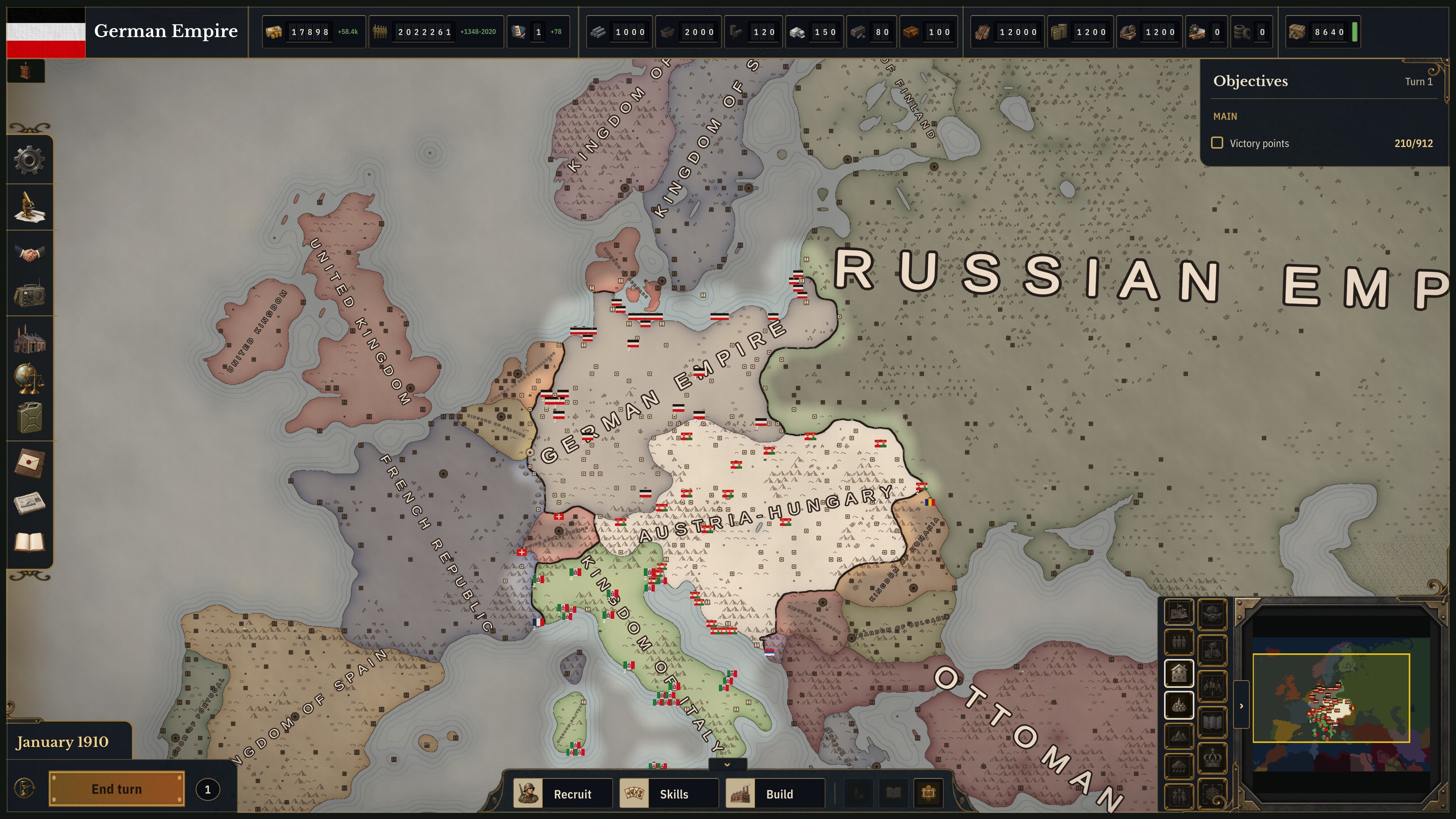 Europe 1910 on the paper map
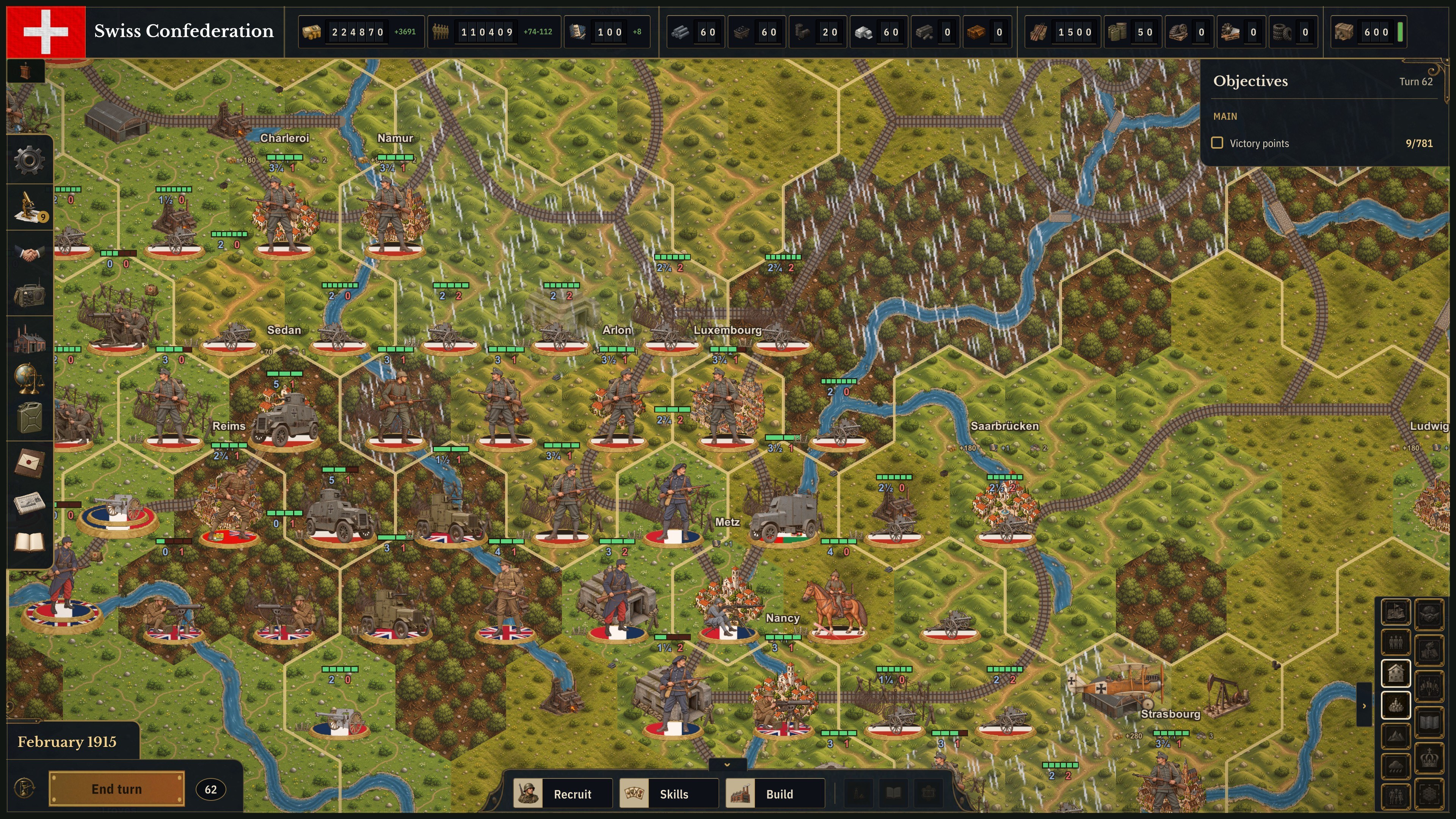 Europe 1910: the Western Front in 1915
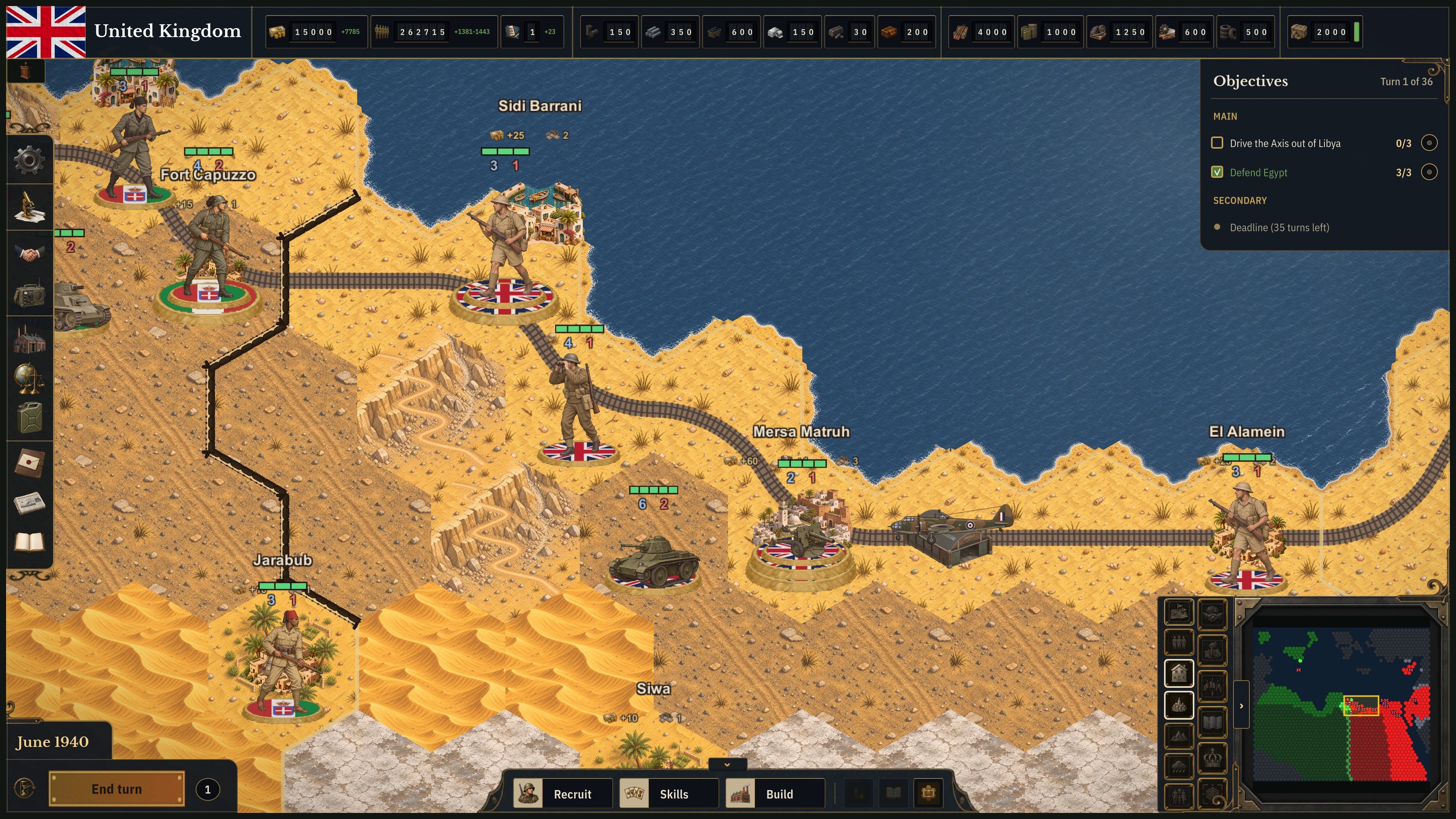 North Africa 1940: the desert front
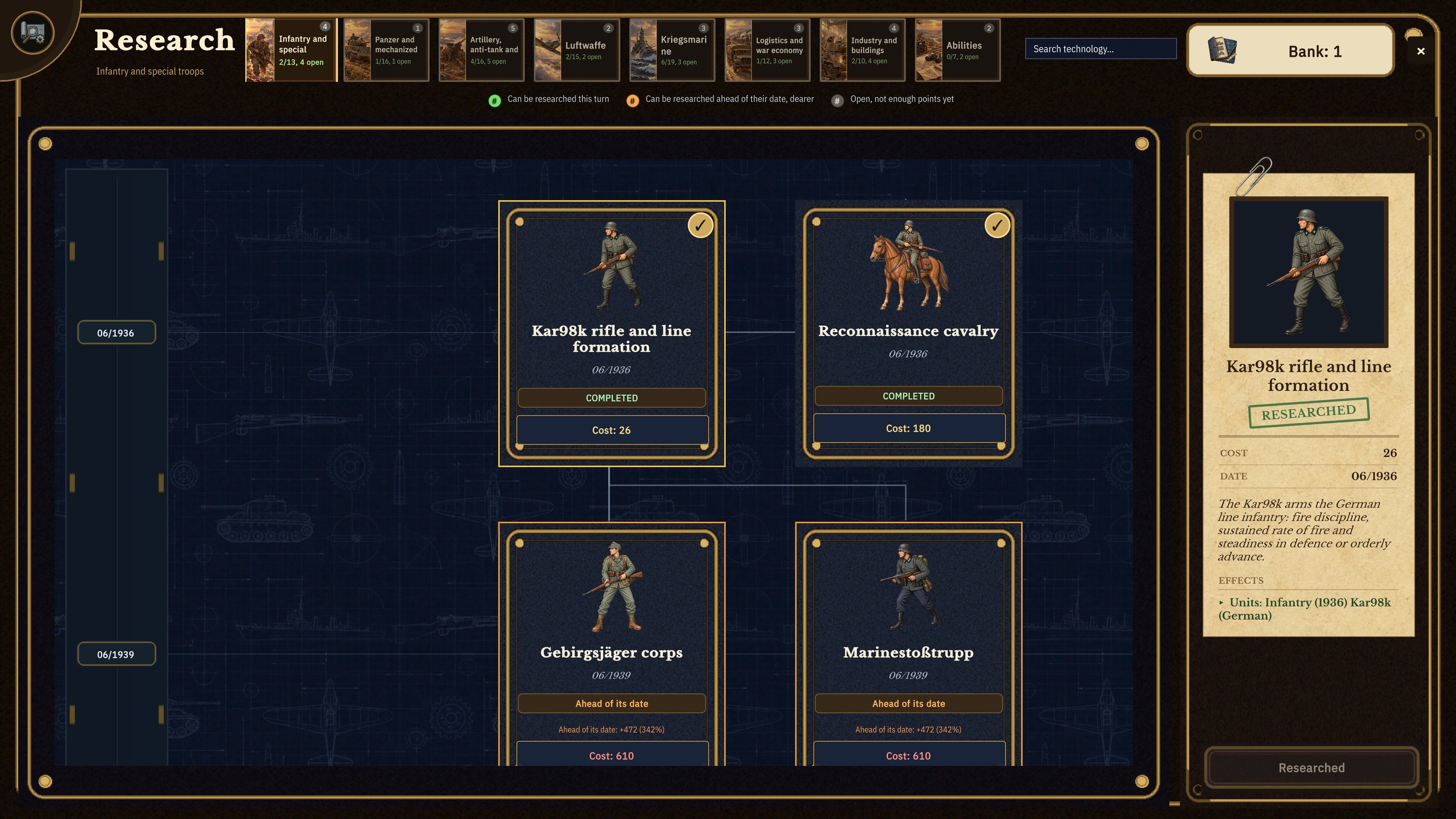 Research: a national technology tree
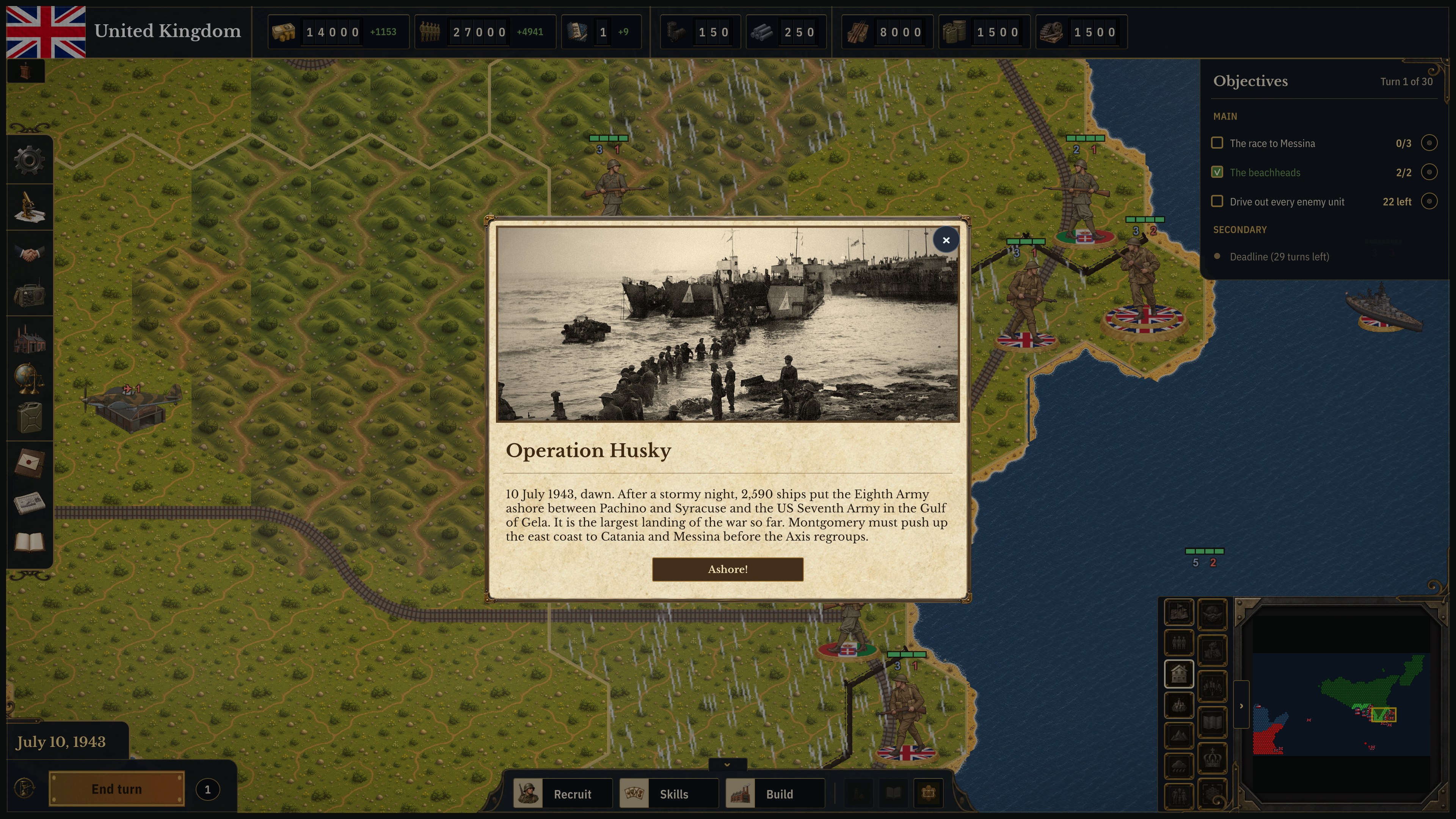 A historical event: Operation Husky
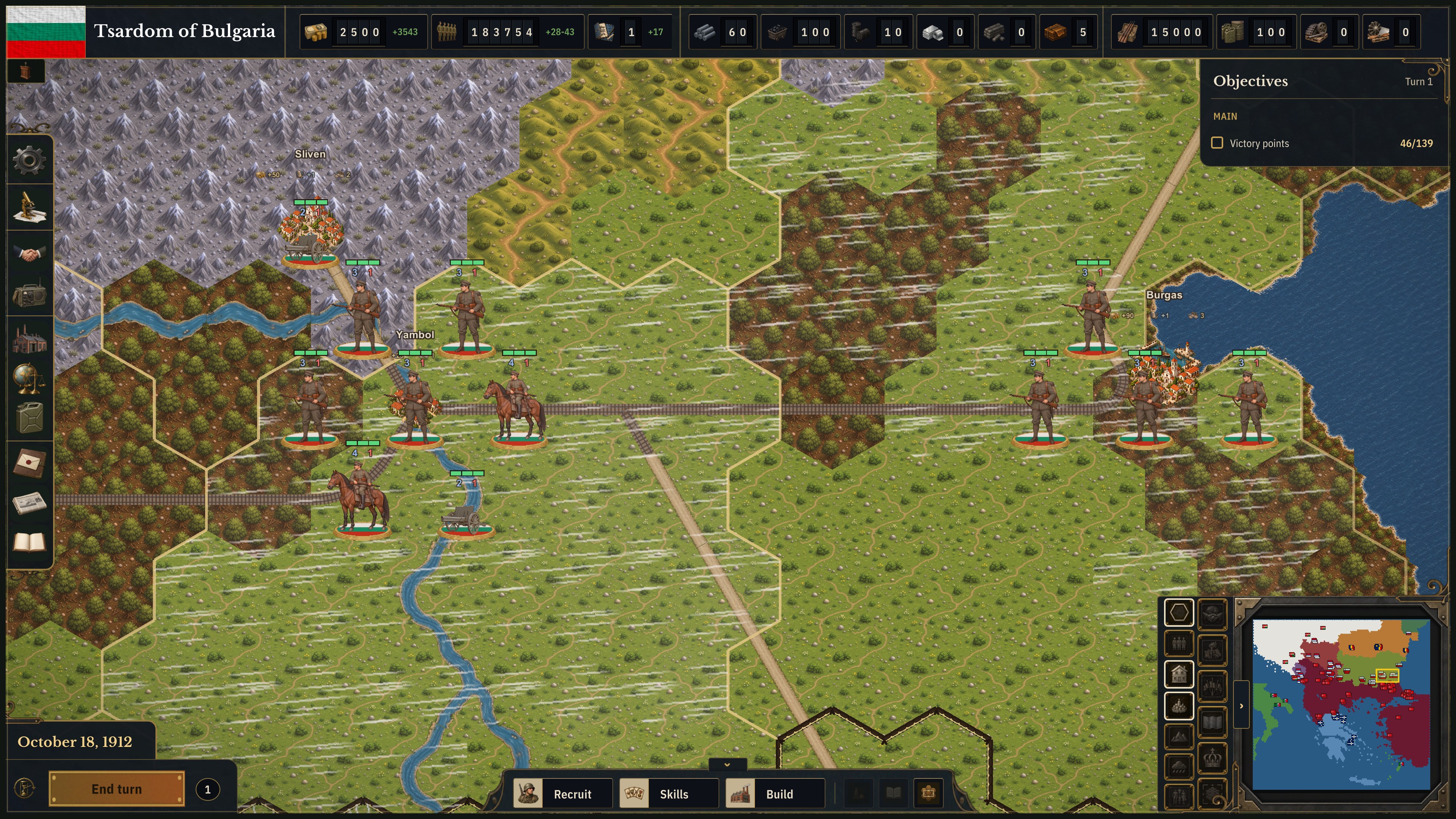 The Balkan Wars, 1912
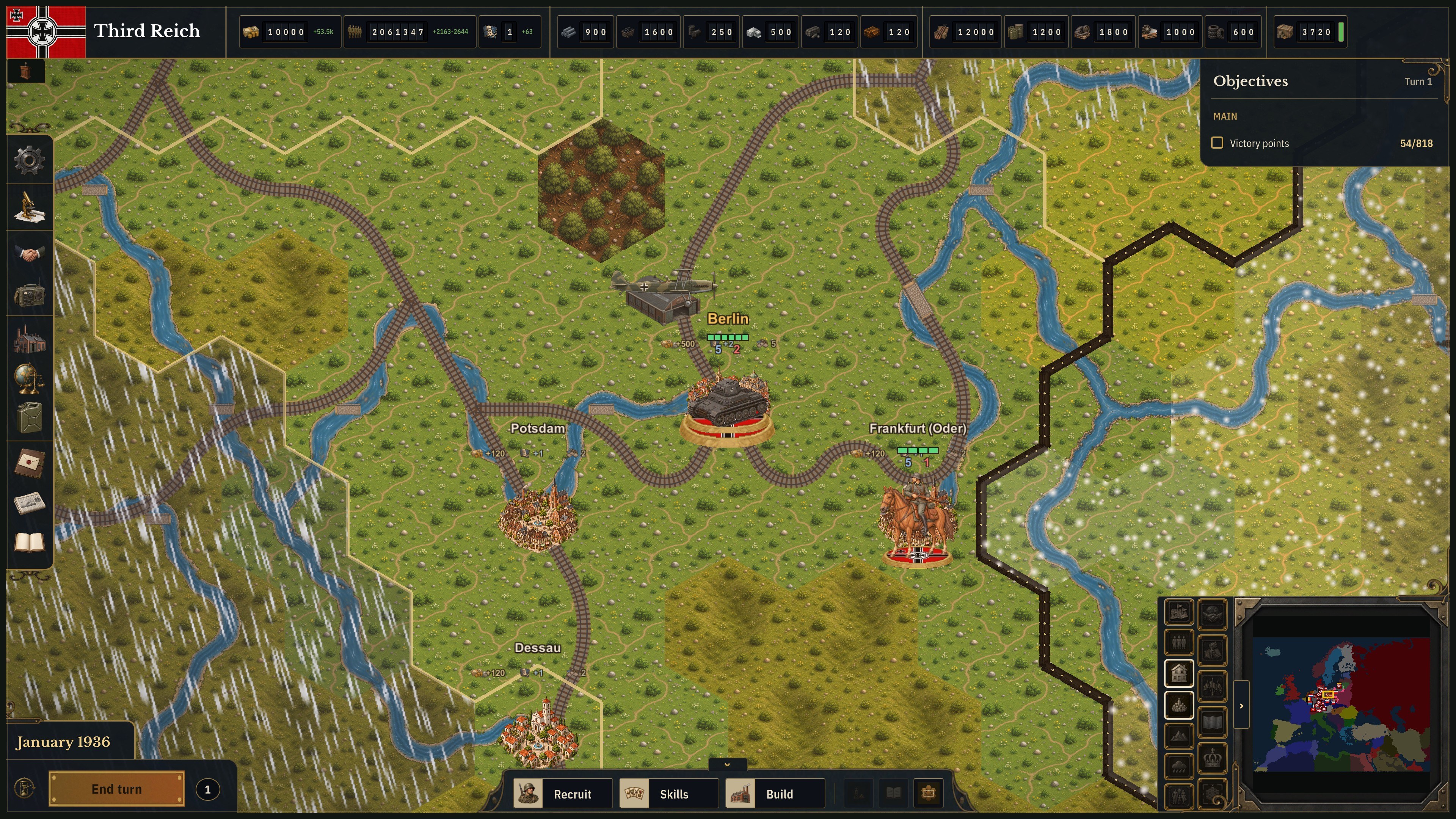 Germany in January 1936
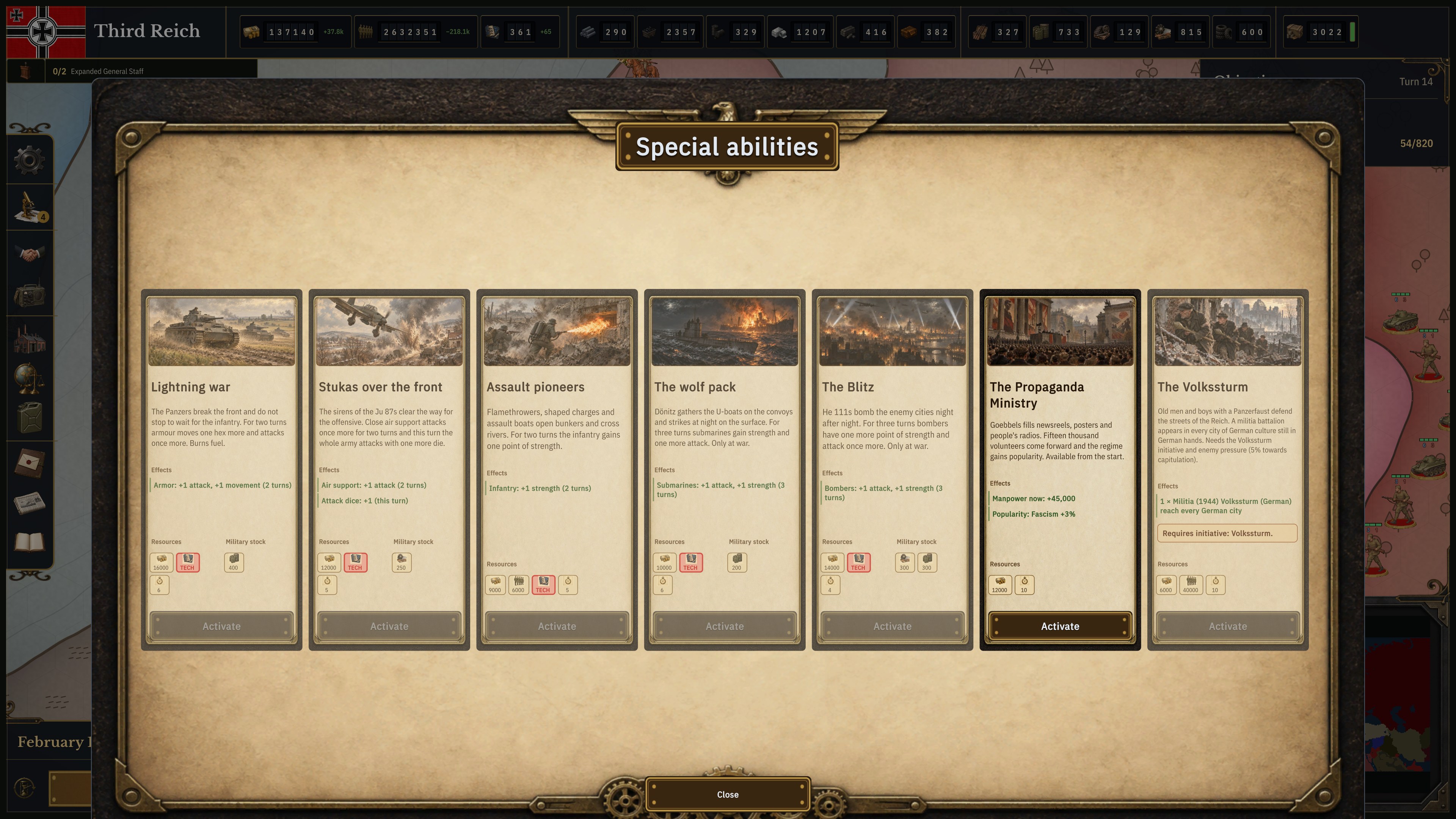 Special abilities of the great powers
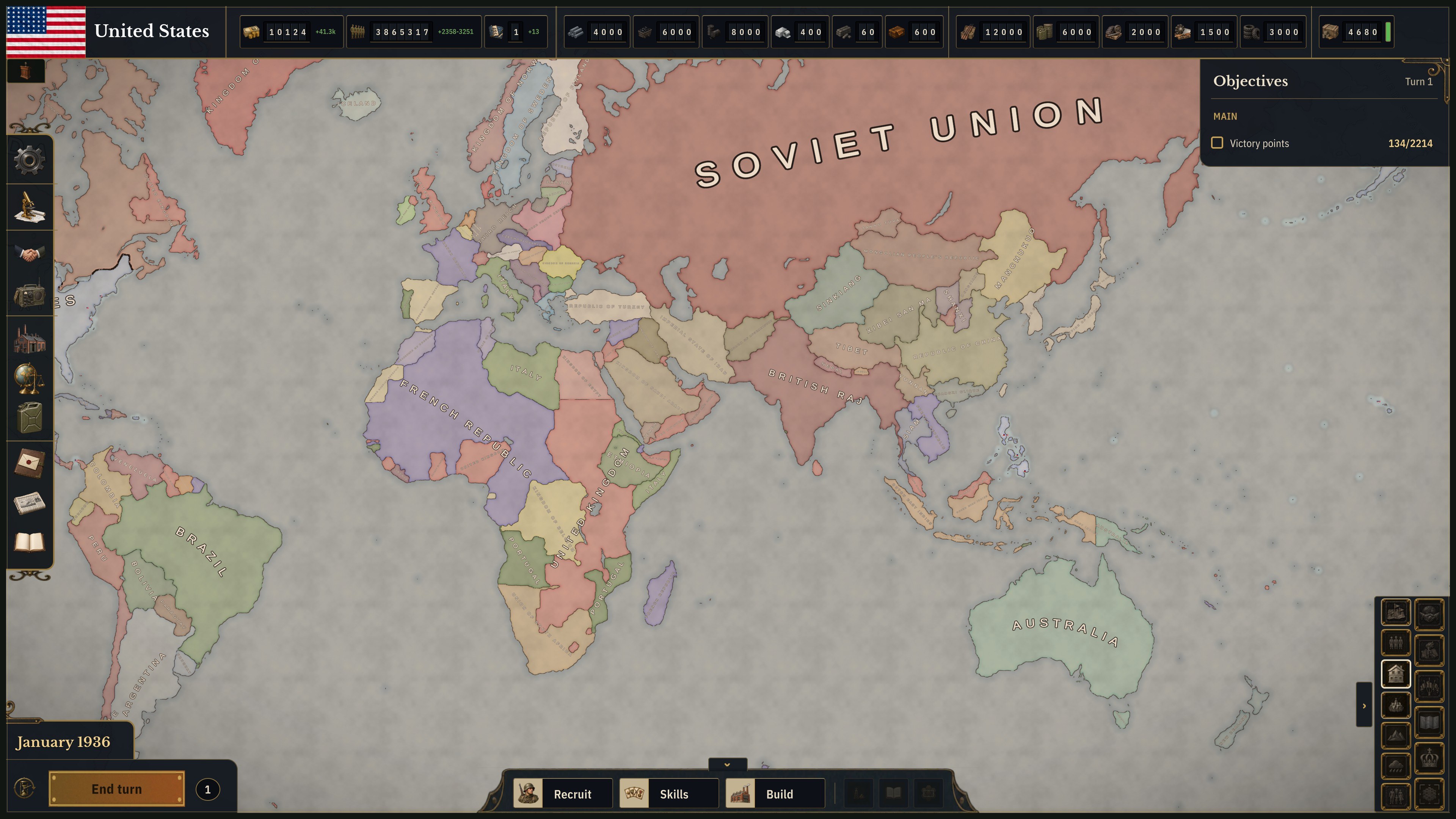 World 1936: the whole globe on one map
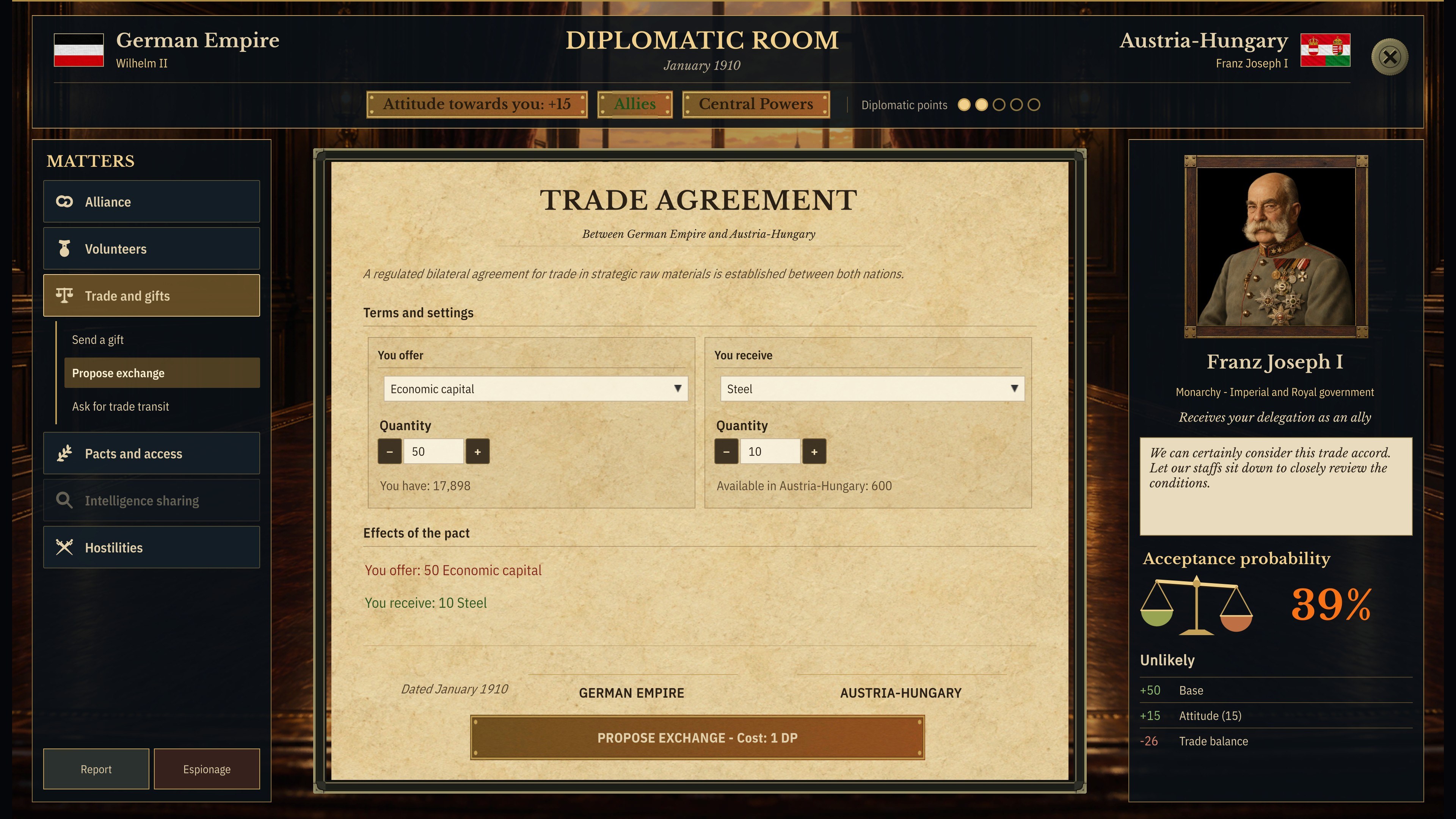 Diplomacy and intelligence
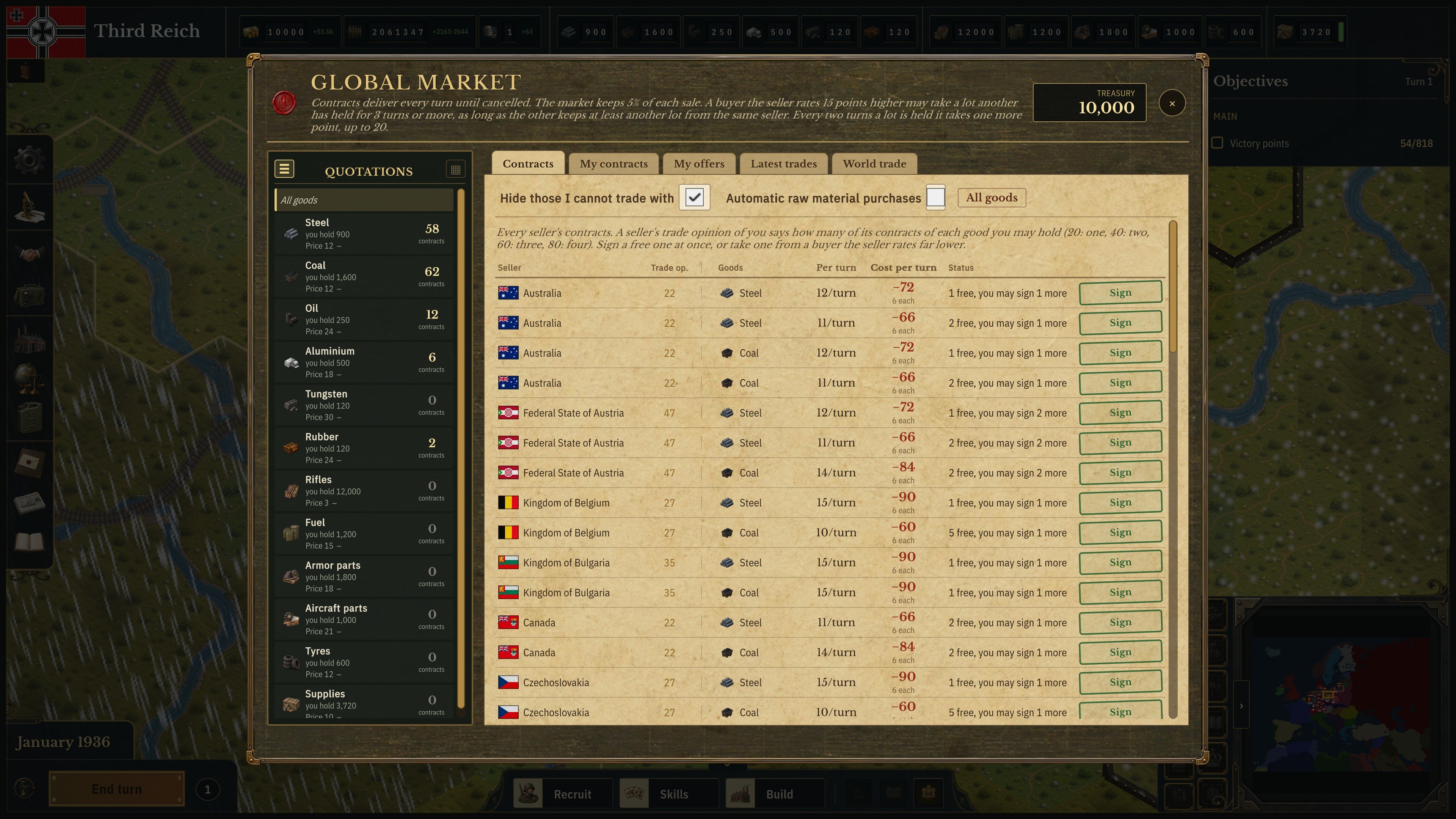 The global market of contracts
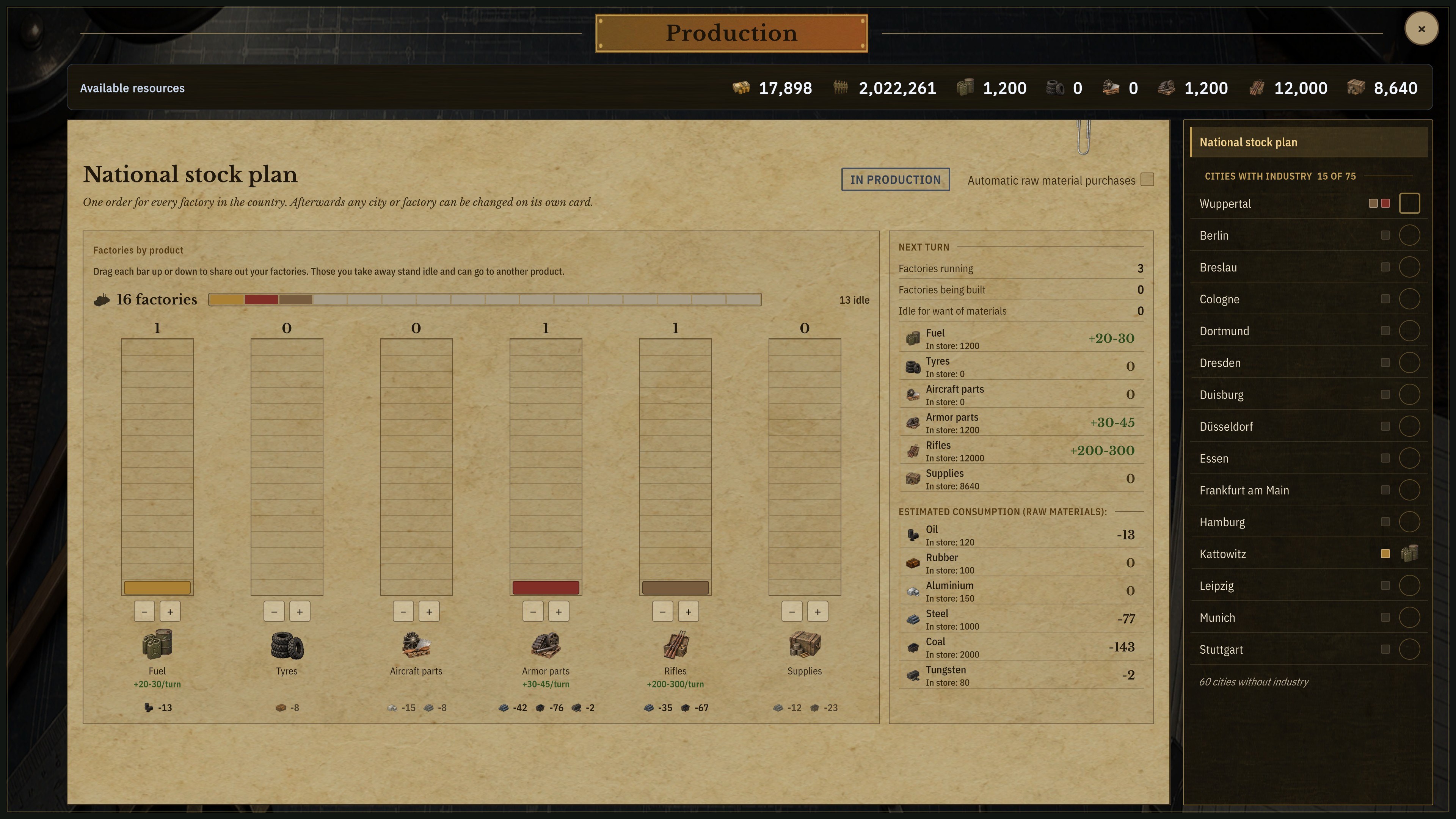 The national production plan
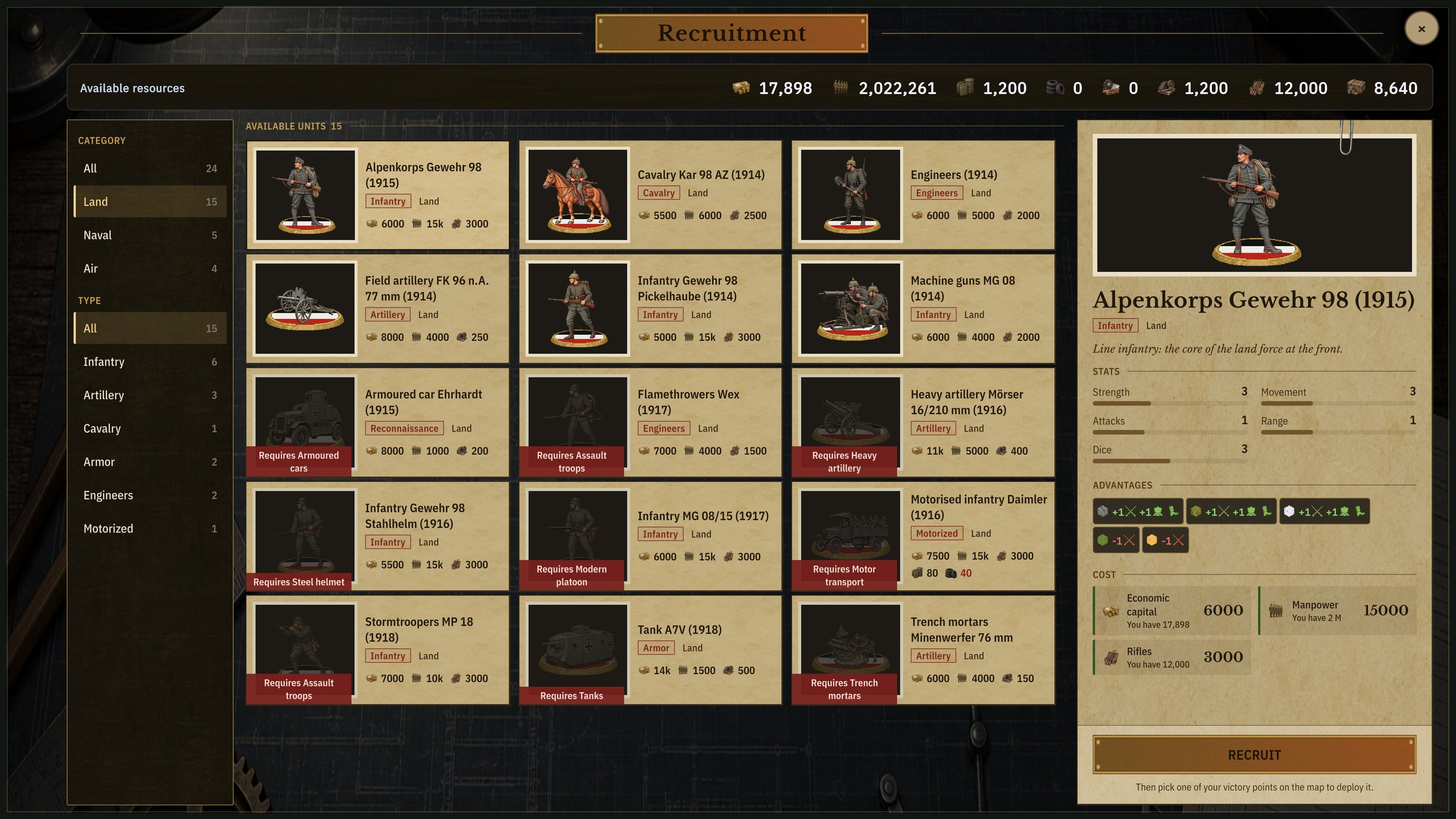 Recruitment of Great War units
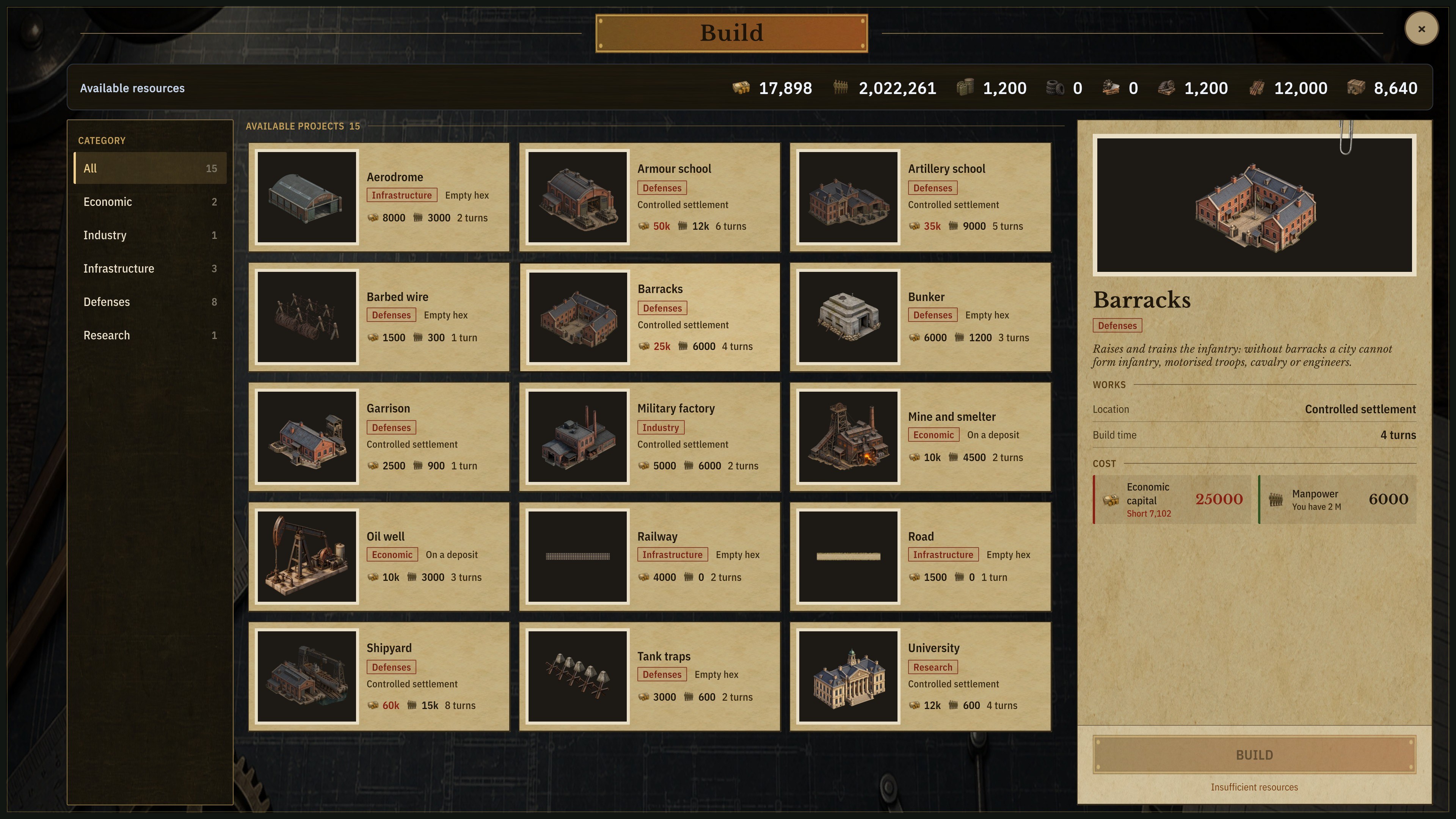 Construction
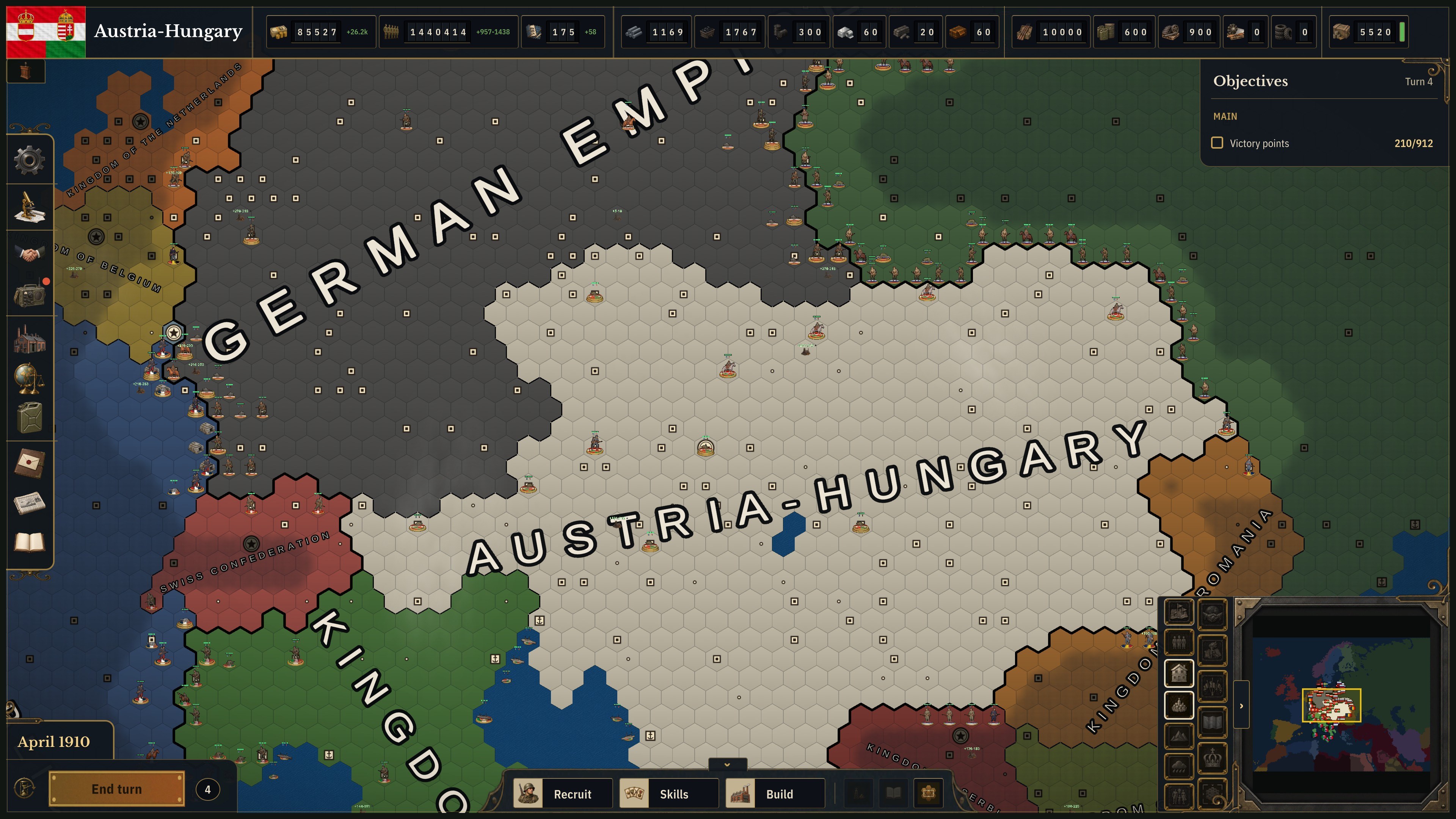 Central Europe in 1910
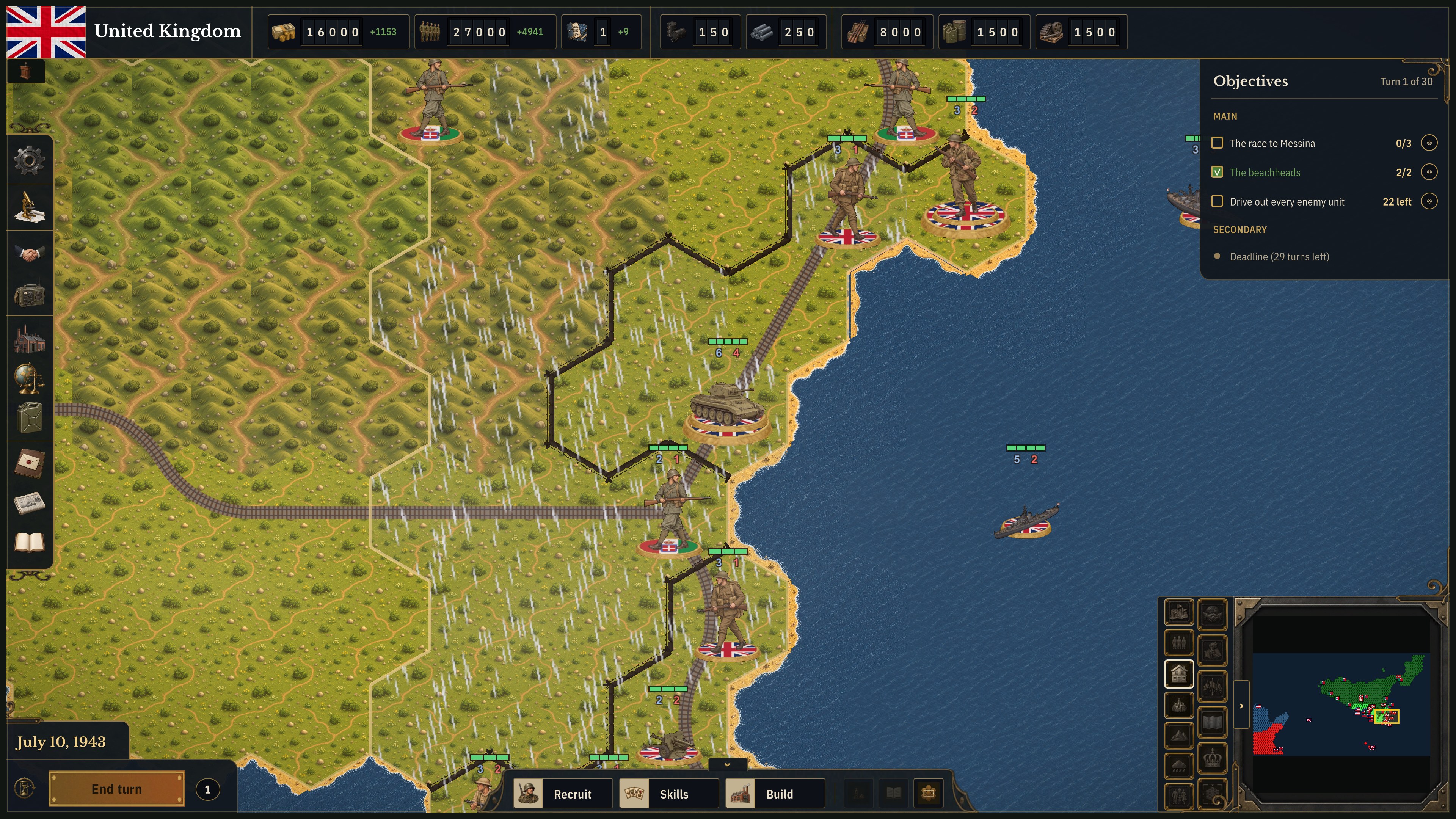 Sicily 1943: the British landings
Logos and key art
 Logo, transparent PNG
 Emblem, transparent PNG
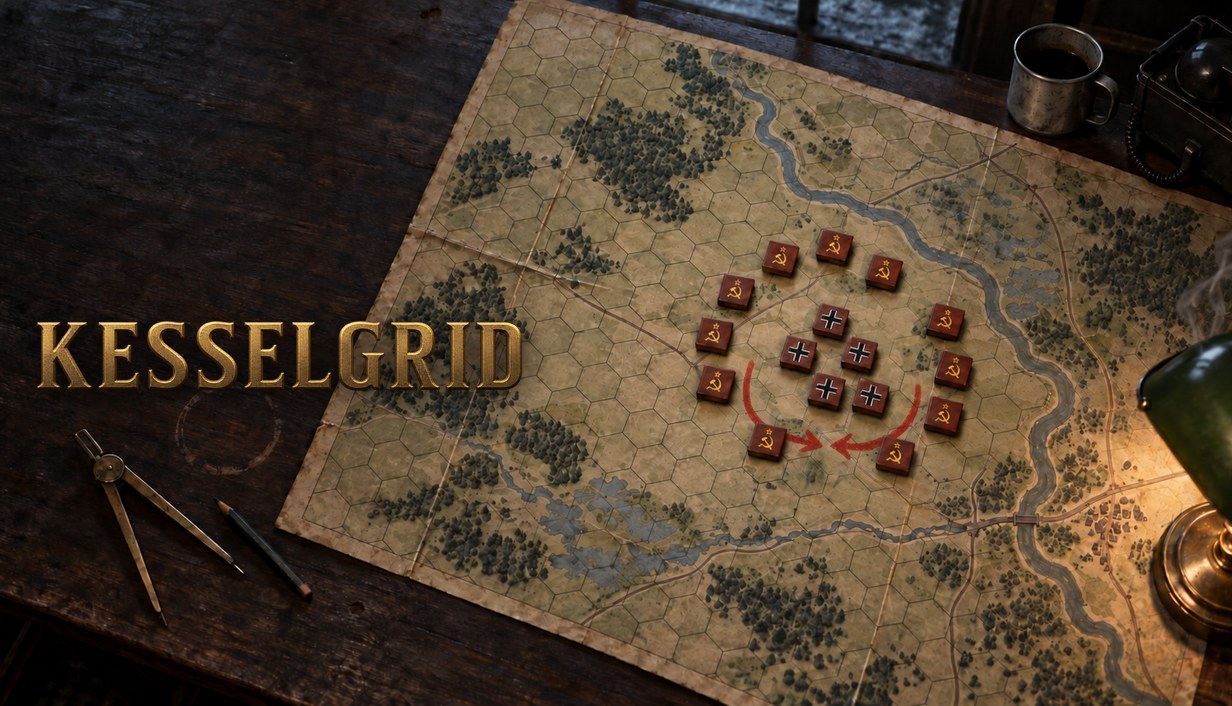 Key art, 1232×706
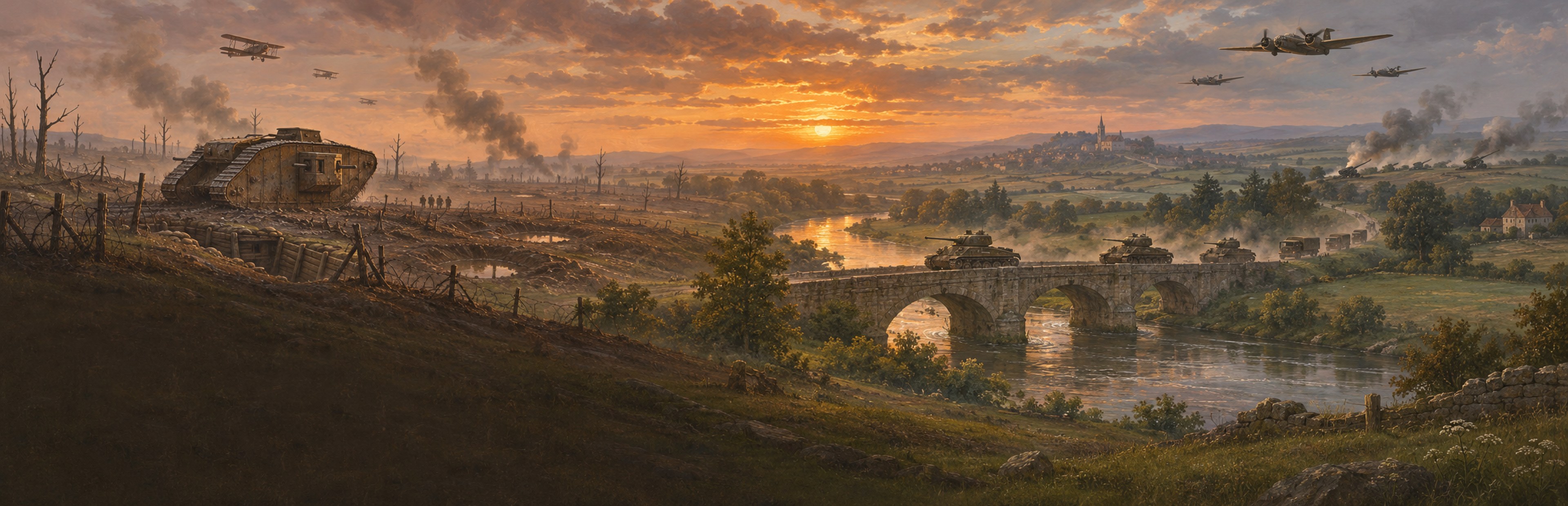 Key art panorama, 3840×1240
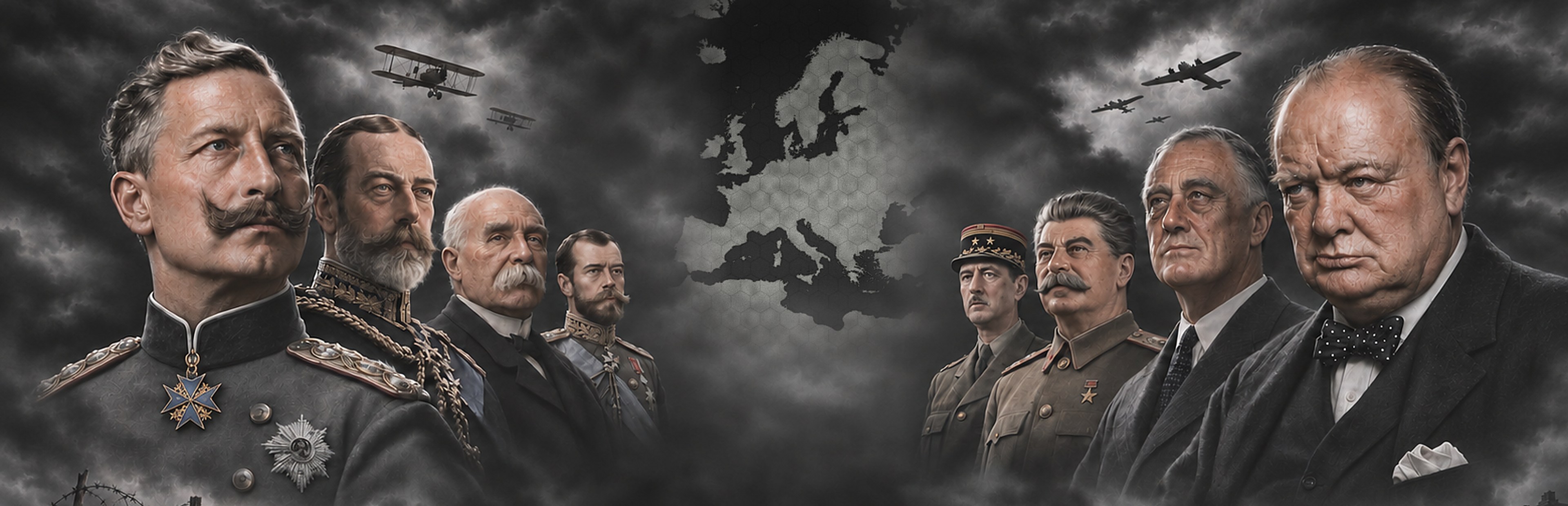 Key art with the leaders of both wars, 3840×1240
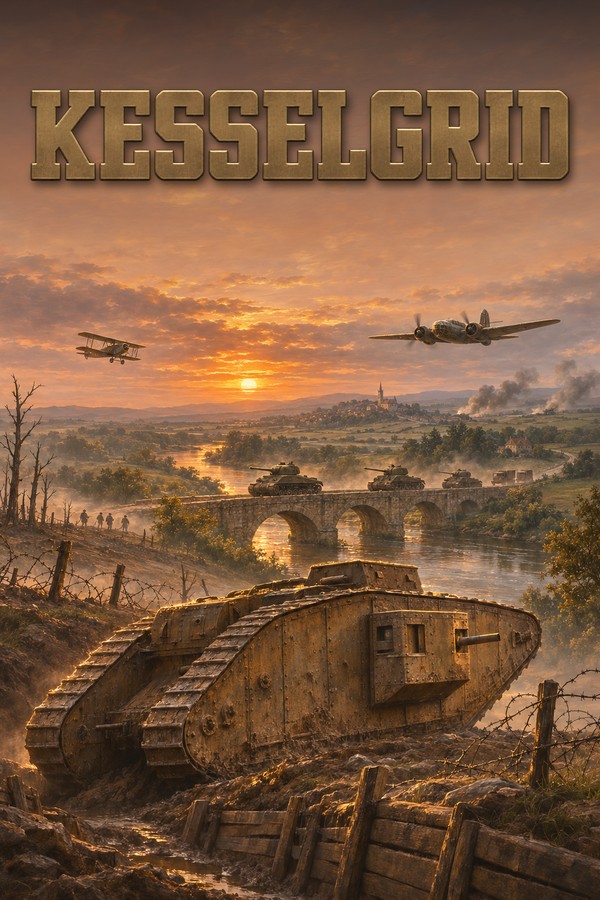 Vertical capsule, 600×900
You may use these images to write about or cover Kesselgrid. Please do not alter the logo.
Contact
Press, content creators and review keys: contact@kesselgrid.com. Development news on Discord and X.